SaaS inbound and outbound marketing are complementary strategies that differ in how they reach potential buyers. Inbound marketing attracts in-market buyers through valuable content that draws prospects searching for solutions. This pull strategy uses owned channels such as SEO, content marketing, and social media to build brand equity over time. Outbound marketing runs a push strategy that proactively reaches defined target accounts through direct outreach such as cold emails, calls, and LinkedIn messages. This push approach creates immediate engagement with specific high-value accounts.
The core contrast between these strategies lies in buyer engagement and resource allocation. Inbound marketing pursues long-term growth by nurturing prospects with educational content, which compounds over time to raise brand recognition and trust. Outbound marketing delivers speed and precision by targeting accounts that match the company's ideal customer profile. Both strategies hold distinct advantages and work together to strengthen a SaaS company's marketing, depending on its stage, annual contract value, and sales cycle complexity.
What is the difference between inbound and outbound marketing for SaaS?
Inbound and outbound marketing for SaaS differ in their approach to demand generation. Inbound marketing runs a pull strategy that attracts buyers searching for solutions, while outbound marketing runs a push strategy that proactively reaches target accounts that may not yet be in-market. This core difference shapes lead sources, costs, and speed.
Inbound marketing generates leads from organic channels such as SEO and content marketing. These leads carry lower long-term cost per acquisition but need 6 to 18 months to build a strong pipeline. Outbound marketing sources leads through cold outreach and paid advertising and delivers faster results within 1 to 4 weeks. Outbound carries stable, scalable costs because it relies on direct prospecting and paid channels.
Despite these differences, inbound and outbound marketing share the goal of producing qualified meetings with buyers who fit the Ideal Customer Profile (ICP). Each approach needs strong messaging and content that speaks to target buyers, deployed through different channels and at various funnel stages. These distinctions help SaaS businesses decide which strategy fits their growth stage and market characteristics.
What Is Inbound Marketing for SaaS?
Inbound marketing for SaaS is a pull-based demand generation strategy that attracts buyers through valuable content and owned digital channels and converts prospects searching for solutions to their problems. This approach uses educational resources, such as blog posts, SEO-optimized landing pages, guides, webinars, and tools, to answer buyer questions and rank in search engines, which draws in-market prospects to the SaaS product organically.
The scope of inbound channels includes organic search (SEO), content marketing hubs, social media publishing, podcasts, community forums, email newsletters, and product-led freemium models. These owned and earned channels build visibility and trust over time and position the SaaS product as a thought leader in its category. Inbound marketing invests upfront in creating assets that keep generating leads long after publication, rather than paying for each impression or contact.
A key attribute that separates inbound marketing is its compounding nature. Content assets accumulate authority and traffic over time, which creates a flywheel effect where earlier investments keep paying dividends months or years later. A thorough guide published today may rank on page one of Google within six months and generate qualified leads for years, which makes inbound a high-ROI channel for SaaS companies with the patience to build momentum and the discipline to produce valuable content that serves buyer intent.
What Is Outbound Marketing for SaaS?
SaaS outbound marketing is a proactive strategy where companies reach out directly to specific target accounts and decision-makers. This approach uses channels such as cold email, LinkedIn outreach, paid advertising, and sales calls, which engage prospects who have not yet interacted with the brand. The scope of outbound marketing includes work by sales development representatives (SDRs), account-based marketing (ABM) campaigns, and targeted advertising that interrupts rather than responds to search intent.
The key attribute of outbound marketing is its speed to targeted pipeline. Inbound marketing relies on organic discovery and asset building over time, while outbound marketing generates immediate results. Campaigns secure qualified conversations and drive traffic fast, which helps SaaS companies meet short-term revenue goals, enter new market segments, or engage buyers unaware of their needs. Outbound efforts scale with added resources, but results decline fast when activity stops, which points to the need for sustained effort and investment. Our guide to the most effective SaaS outbound marketing strategies breaks down each channel by deal size and pipeline metric.
Key Differences Between SaaS Inbound and Outbound Marketing
SaaS inbound and outbound marketing differ across four key dimensions: cost, speed, buyer intent, and measurement.
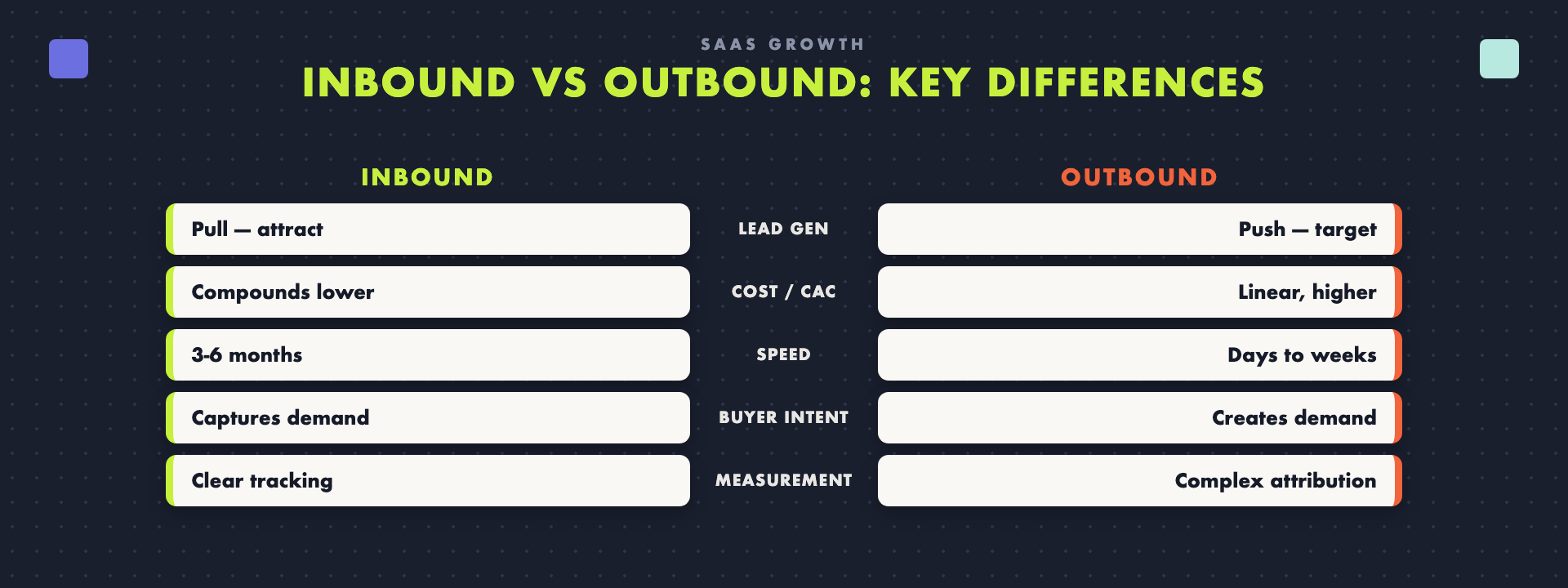
Inbound marketing needs an initial investment in content and SEO, which lowers customer acquisition cost over time as assets compound. This compounding effect makes inbound marketing more cost-effective over the long run. Outbound marketing needs continuous spending on tools and resources, which produces a linear cost structure that scales directly with volume.
Speed to pipeline is another difference. Outbound marketing delivers immediate results by targeting specific accounts and often generates meetings within days or weeks. Inbound marketing usually takes 3 to 6 months before organic channels produce leads consistently, though these leads become self-sustaining once established. Buyer intent also varies between the two approaches. Inbound marketing captures high-intent buyers searching for solutions, while outbound marketing allows precise account selection and reaches specific ideal customer profiles even when they are not in-market.
Measurement and attribution present further contrasts. Inbound marketing runs complex attribution across long buyer journeys, which makes isolating channel ROI hard. Outbound marketing offers clearer cause-and-effect between outreach and booked meetings, though crediting deals gets complex when both strategies run at once. The choice between inbound and outbound marketing often depends on the SaaS company's stage and business model. Early-stage startups may weight outbound marketing for speed and targeting control, while growth-stage companies with longer runways may weight the compounding efficiency of inbound marketing.
| Dimension | Inbound | Outbound |
|---|---|---|
| Cost structure | Upfront investment in content and SEO that compounds and lowers CAC over time | Continuous spend on tools and resources — a linear cost that scales with volume |
| Speed to pipeline | 3 to 6 months before organic channels produce leads consistently | Immediate — meetings within days or weeks |
| Buyer intent | Captures high-intent buyers already searching for solutions | Precise account selection; reaches specific ICPs even when not in-market |
| Measurement | Complex attribution across long buyer journeys; ROI hard to isolate | Clearer cause-and-effect, though crediting gets complex when both run at once |
Lead Generation Approach Differences Between Inbound and Outbound
The primary distinction in lead generation between inbound and outbound marketing for SaaS lies in who initiates contact. Inbound marketing attracts leads through valuable content that prospects seek out, such as blog posts, webinars, and SEO-optimized articles. This method relies on prospects discovering and engaging the content on their own, which pulls them into the sales funnel. Inbound leads often qualify better, since they have shown initial interest in the solution offered.
Outbound marketing proactively reaches leads who may not yet recognize their need for the product. This approach targets specific accounts by defining an Ideal Customer Profile (ICP) and using methods such as cold emails, LinkedIn outreach, and direct calls to push the message to these prospects. Outbound marketing gives greater control over lead generation, since it lets the company target decision-makers within the desired market segment directly. This proactive approach builds a targeted pipeline fast, though it needs more resources and effort than inbound marketing.
Cost and CAC Differences Between Inbound and Outbound
The cost structures and Customer Acquisition Cost (CAC) for SaaS companies differ between inbound and outbound marketing. Inbound marketing carries higher initial expenses through investments in content creation, SEO, and automation platforms. These assets compound over time, which lowers the per-lead cost as organic traffic rises. The long-term CAC for inbound marketing ends up lower than the initial outlay suggests, and inbound leads cost 61 percent less than outbound leads, according to HubSpot's 2012 State of Inbound Marketing report, which measured $135 per inbound lead against $346 per outbound lead.
Outbound marketing follows a linear cost model that needs continuous spending on paid channels, sales representatives, and outreach tools. Each new lead needs fresh investment, which holds CAC stable or raises it as markets saturate. Outbound offers immediate visibility and predictable volume, while its ongoing costs often push total CAC 2 to 3 times higher than mature inbound programs. Despite higher costs, outbound marketing justifies its expense through precise targeting and rapid market penetration, which helps SaaS companies focused on specific accounts or niches.
Speed and Scalability Differences Between Inbound and Outbound
Speed and scalability separate inbound from outbound marketing for SaaS companies. Outbound marketing delivers immediate speed to pipeline through controlled outreach such as cold emails and paid advertising. These techniques generate leads and meetings within days, which makes outbound ideal for scenarios that need quick results, such as product launches or market entries. Outbound scalability is linear and needs added investment in tools and personnel to expand reach.
Inbound marketing operates on a longer timeline and takes about 3 to 6 months to gain momentum through content and SEO. Once established, inbound channels scale exponentially through organic growth and rising brand authority. This compounding effect lets inbound marketing generate leads continuously without large additional cost, which makes it a sustainable long-term strategy. Inbound is slower to start, and its scalability advantage carries weight for mature SaaS companies optimizing unit economics over time.
Buyer Intent and Targeting Differences Between Inbound and Outbound
The core distinction between inbound and outbound marketing lies in how they approach buyer intent and targeting. Inbound marketing captures existing demand from prospects searching for solutions to their problems. This approach relies on pull strategies such as SEO and content marketing to attract leads with demonstrated intent. Inbound leads often enter the funnel with higher intent but vary in their Ideal Customer Profile (ICP) fit.
Outbound marketing creates new demand by proactively reaching defined accounts before they express intent. This method uses push tactics such as cold emails and LinkedIn outreach to engage decision-makers who fit the ICP by design. Outbound marketing allows precise targeting, since it focuses on firmographic fit and other signals even when initial buyer intent is low. These differences in intent and targeting shape how each approach gets measured and optimized.
Measurement and Attribution Differences Between Inbound and Outbound
Measurement and attribution in SaaS marketing differ between inbound and outbound approaches. Inbound marketing provides clearer attribution through the digital footprints buyers leave. These footprints include website visits, content downloads, and email engagements, which teams track and link to specific campaigns. Digital tracking supports precise measurement and optimization through analytics tools such as UTM tags and dashboards. Inbound marketing tracks interactions across the funnel, which raises measurability and lets SaaS teams assign revenue to specific channels.
Outbound marketing presents more complex attribution challenges. Initial touchpoints such as cold emails and sales calls are proactive and often convert through inbound channels later. This sequence creates attribution conflicts between first-touch (outbound) and last-touch (inbound) models. Outbound marketing needs first-touch or multi-touch attribution models to properly credit outbound effort. These models track which outbound sequences or account lists generate pipeline, though outbound measurement often needs manual logging of interactions, which makes it harder to automate. This complexity calls for strong alignment between sales and marketing teams to attribute ROI accurately.
Where SaaS Inbound and Outbound Marketing Overlap?
SaaS inbound and outbound marketing overlap in several key areas.
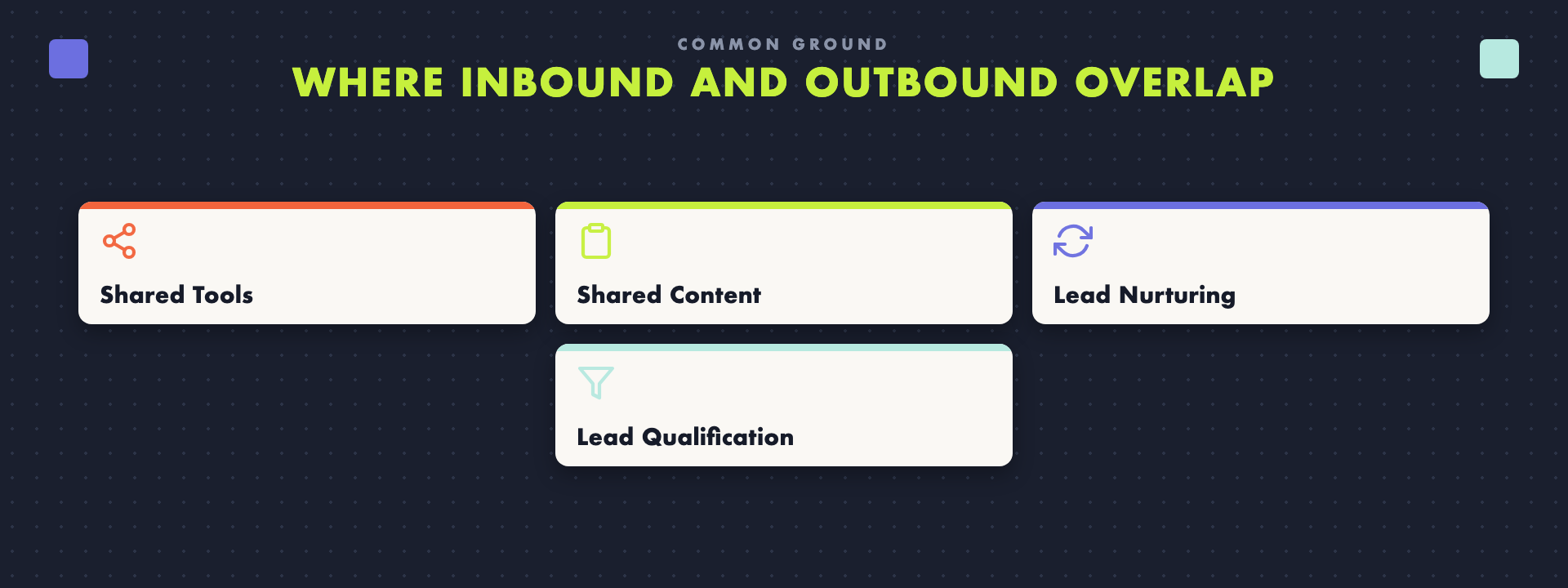
Both strategies use shared tools and content assets, such as CRM platforms, analytics tools, and email systems, to manage prospects and measure performance. Both also rely on common content types such as case studies, product demos, and industry guides to educate buyers at various funnel stages. The overlap extends to critical funnel stages, particularly lead nurturing and qualification, where inbound leads and outbound prospects need similar engagement tactics to move toward conversion. Shared technology stacks and content infrastructure make blending these strategies practical and strategically advantageous, which lets SaaS companies use existing resources while covering a broader spectrum of buyer readiness and market presence. This shared foundation is why hybrid or "allbound" models keep gaining favor, since they combine inbound's scalable pull with outbound's targeted push to drive greater pipeline efficiency.
When to Choose Inbound vs Outbound for SaaS?
The choice between inbound and outbound marketing for SaaS hinges on several situational factors. Early-stage SaaS companies often choose outbound marketing to validate demand fast and reach high-value accounts, especially when targeting enterprise clients with a high Annual Contract Value (ACV) of $30K or more. Outbound works well when the sales cycle is short and the target market is narrow and needs swift pipeline generation within 90 days.
Inbound marketing fits SaaS models focused on small to medium-sized businesses (SMBs) or product-led growth. These scenarios gain from inbound's ability to attract buyers already searching for solutions, which supports a scalable, predictable pipeline over time. Inbound fits when the sales cycle runs longer and the emphasis falls on building long-term, compounding assets that lower cost-per-lead.
The choice between inbound and outbound marketing depends on the company's stage, the ACV, and the length of the sales cycle. Mid-market SaaS companies often gain from a blended approach that uses inbound to capture in-market interest and outbound to accelerate engagement with strategic accounts.
Best Fit for SaaS Inbound Marketing
SaaS inbound marketing fits companies with longer sales cycles and lower average contract values (ACV). This approach helps businesses that rely on organic discovery and self-education, such as those targeting small to medium-sized businesses (SMBs). Inbound fits these conditions because it lowers customer acquisition costs over time through content marketing and SEO, which compound in value as they build trust and answer buyer questions before sales teams engage.
Best Fit for SaaS Outbound Marketing
SaaS outbound marketing fits companies targeting high-value contracts, specifically those with annual contract values above $10,000 to $25,000. This approach works well for businesses engaging enterprise-level clients or specific decision-makers within defined accounts. Outbound marketing excels where immediate pipeline generation matters, since it delivers speed and precision in reaching ideal customer profiles without waiting for organic discovery.
How to Combine Inbound and Outbound Into a SaaS Growth Engine
Combining inbound and outbound marketing into a SaaS growth engine means sequencing both methods to widen market coverage and raise efficiency.
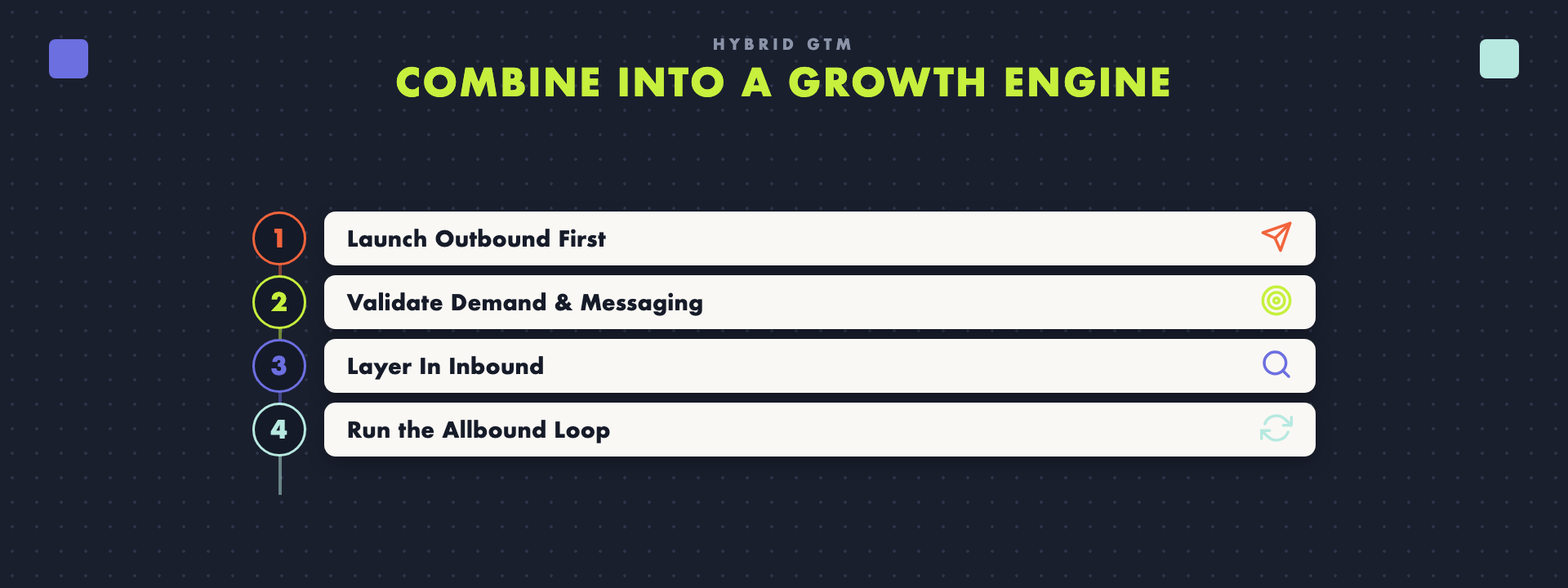
Outbound marketing initiates contact by creating awareness and targeting specific Ideal Customer Profiles (ICPs), which builds initial engagement through personalized outreach. This proactive approach lets SaaS companies test demand, refine messaging, and generate pipeline within weeks.
Inbound marketing complements outbound by capturing latent intent and nurturing self-selecting buyers through content, SEO, and educational resources. Over time, inbound effort builds a sustainable, scalable asset that lowers cost per lead and supports non-linear growth without added headcount. The optimal strategy launches outbound effort first to establish demand and validate messaging. Once validated, inbound strategies layer in to capture a broader market and lower reliance on costly sales teams.
This integrated approach sustains engagement across the buyer's journey. Outbound marketing reaches buyers before they begin their search, which shapes evaluation criteria and drives initial interest. Inbound marketing attracts buyers searching for solutions, which builds a feedback loop where prospects identified through inbound effort receive targeted outbound follow-up. This blend, often called a "hybrid GTM" or "allbound" strategy, raises pipeline efficiency 2 to 3 times over a single-channel approach.
How a SaaS Marketing Agency Balances Inbound and Outbound
A SaaS marketing agency balances inbound and outbound marketing by allocating budget on the client's growth stage and market needs. At SaaS Marketing Agency, we offer a full SaaS marketing strategy that runs inbound and outbound as one system rather than isolated channels. For early-stage SaaS companies, we weight outbound marketing and allocate about 70 percent of the budget to it. This focus on outbound generates your pipeline fast and validates the ideal customer profile through targeted outreach and rapid lead generation. We favor outbound early because it delivers qualified meetings within 4 to 6 weeks, which validates product-market fit fast.
As your SaaS company matures, we shift budget toward inbound marketing and weight content creation, SEO, and other owned channels that compound over time. This transition supports scalable, low-cost lead generation as inbound assets begin to produce consistent organic demand. We scale inbound effort when the total addressable market is broad and buyer intent signals are strong, which supports long-term growth and efficiency. This dynamic allocation keeps outbound effort from cannibalizing inbound learning, while inbound momentum sharpens outbound targeting, which builds a feedback loop that raises customer acquisition efficiency and lifetime value.
What are the Overall Pros and Cons When comparing SaaS Inbound vs Outbound Marketing?
SaaS inbound and outbound marketing each hold distinct advantages and disadvantages that shape strategic decisions. Inbound marketing attracts highly engaged prospects and offers lower long-term customer acquisition costs, though it needs a longer timeline to build momentum. Outbound marketing delivers immediate pipeline generation and precise targeting of high-value accounts but carries higher cost per acquisition and risks reading as intrusive. The trade-off between speed and control versus cost efficiency and trust guides companies toward the right approach for their stage, sales cycle, and budget. The choice depends on whether the priority is sustainable growth or rapid, targeted pipeline generation.
What are the Advantages of Inbound SaaS marketing when Compared to outbound marketing?
Inbound SaaS marketing holds several advantages over outbound approaches. The primary benefits include lower long-term customer acquisition costs, since content and SEO assets compound in value over time without continuous spend; higher-quality leads with demonstrated intent, since prospects self-select by searching for solutions; and stronger scalability, since published content attracts unlimited audiences at once without proportional cost increases. For SaaS companies, the advantages that matter most are the compounding return on investment from evergreen assets and the ability to build a sustainable, predictable pipeline that strengthens rather than depletes with time.
What are the Advantages of Outbound SaaS marketing when Compared to Inbound marketing?
Outbound SaaS marketing holds distinct advantages over inbound approaches, primarily in speed and control. These benefits make outbound a preferred choice for certain strategic goals. The advantages are listed below:
- Immediate Pipeline Velocity: Outbound marketing generates qualified leads in 4 to 8 weeks, far faster than the 6 to 18 months inbound strategies usually need to build significant volume. This speed matters for SaaS companies that need quick, predictable revenue.
- Precise Targeting and Personalization: Outbound marketing allows precise account targeting and personalization at scale. Sales teams focus on ideal customer profiles and high-value accounts rather than sorting varying-quality inbound leads.
- Control Over Messaging and Market Penetration: Outbound strategies give greater control over messaging, timing, and market penetration. This control lets SaaS companies enter new segments, test positioning fast, and generate demand in markets with low brand awareness.
These advantages make outbound marketing ideal for accelerating early growth and targeting defined accounts that may not yet recognize their need for the solution. Paired with inbound's long-term cost efficiency, outbound's speed and precision build a balanced growth engine that sustains recurring revenue expansion across market maturity stages.

About the team
SaaS Marketing Agency Digital Team
The in-house team at SaaS Marketing Agency Digital. We architect growth systems for B2B SaaS companies from Series A through pre-IPO.